Artists give form
to what cannot be shaped
I DESIGN WHAT IS UNSEEN
UNSEEN
My designs.
-
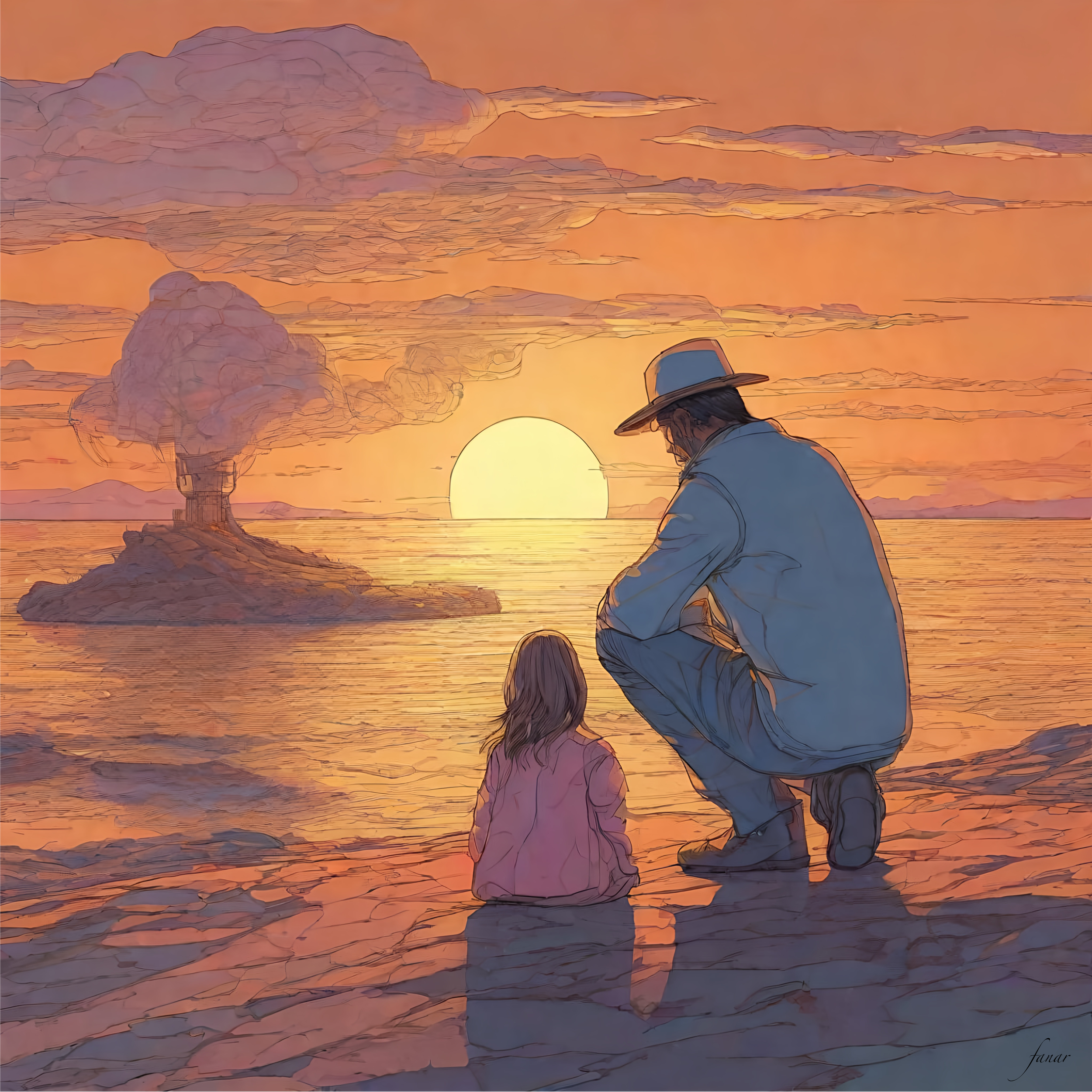
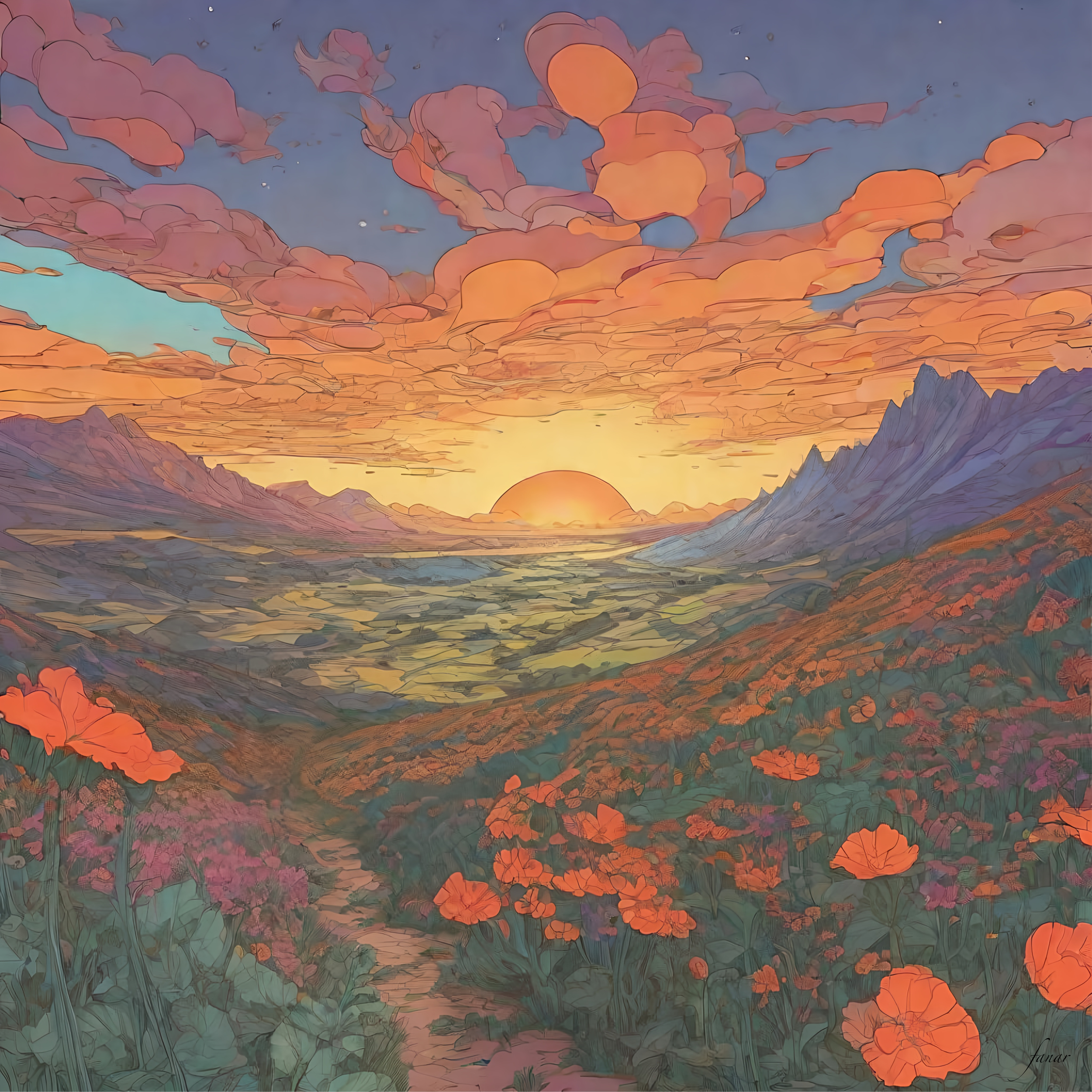
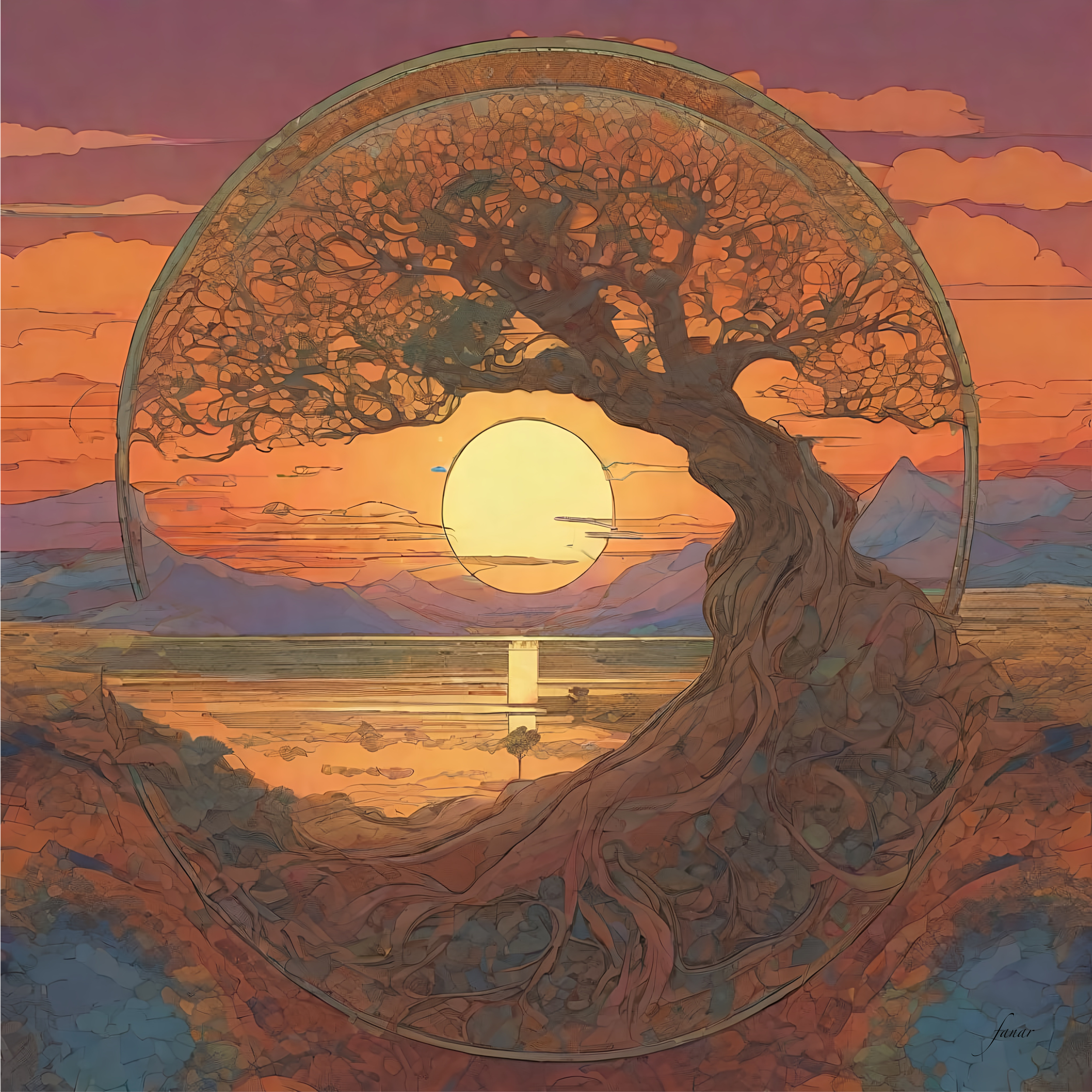
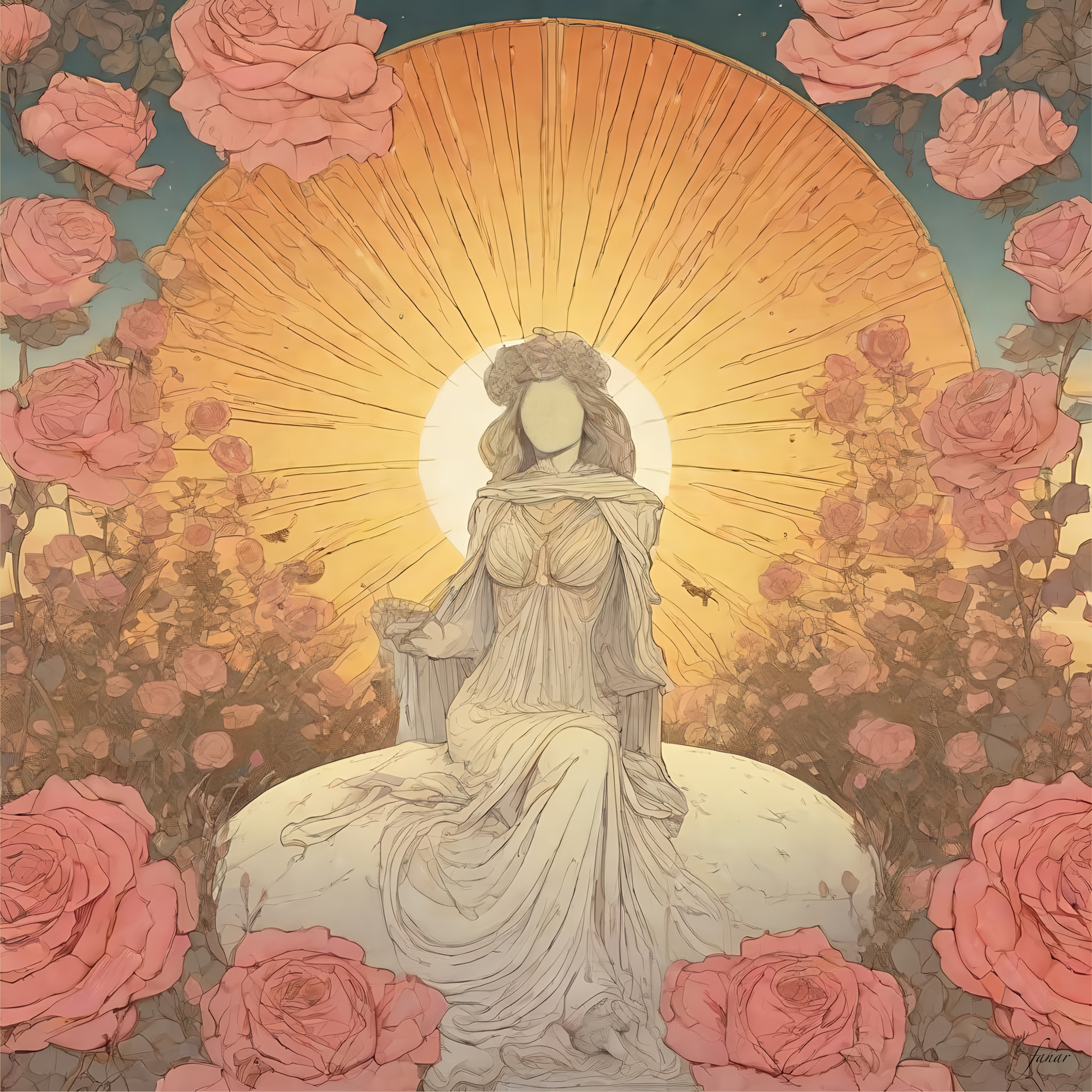
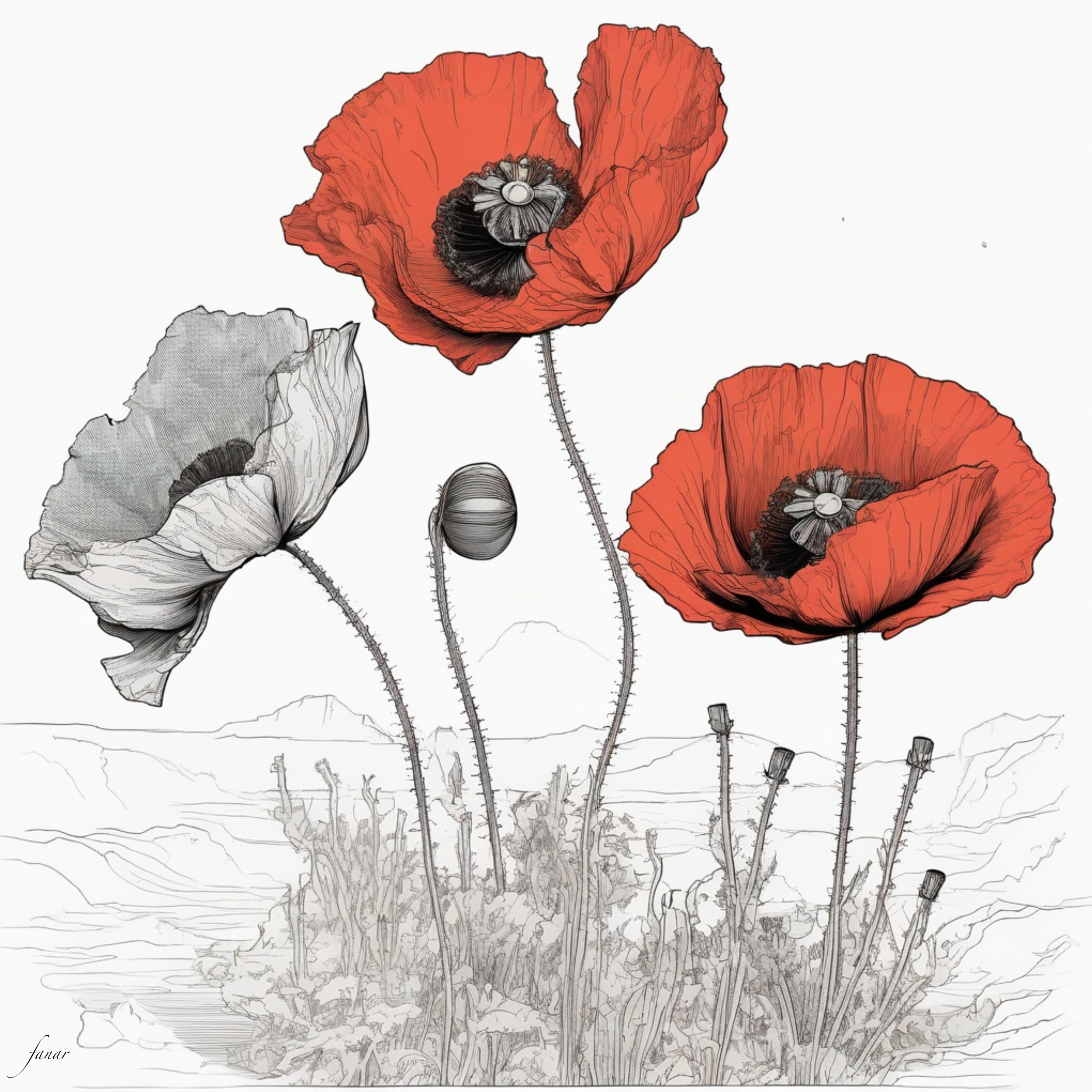
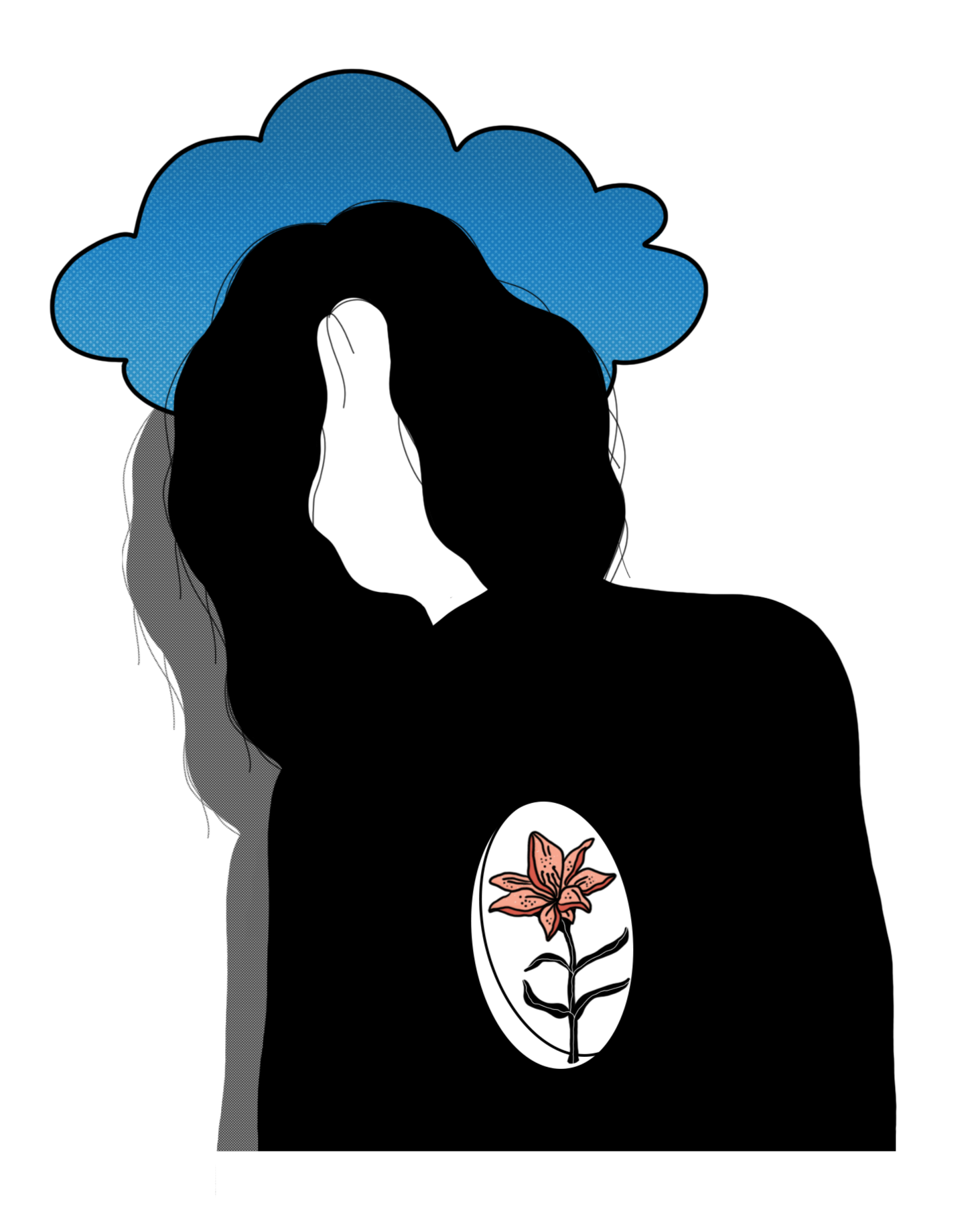
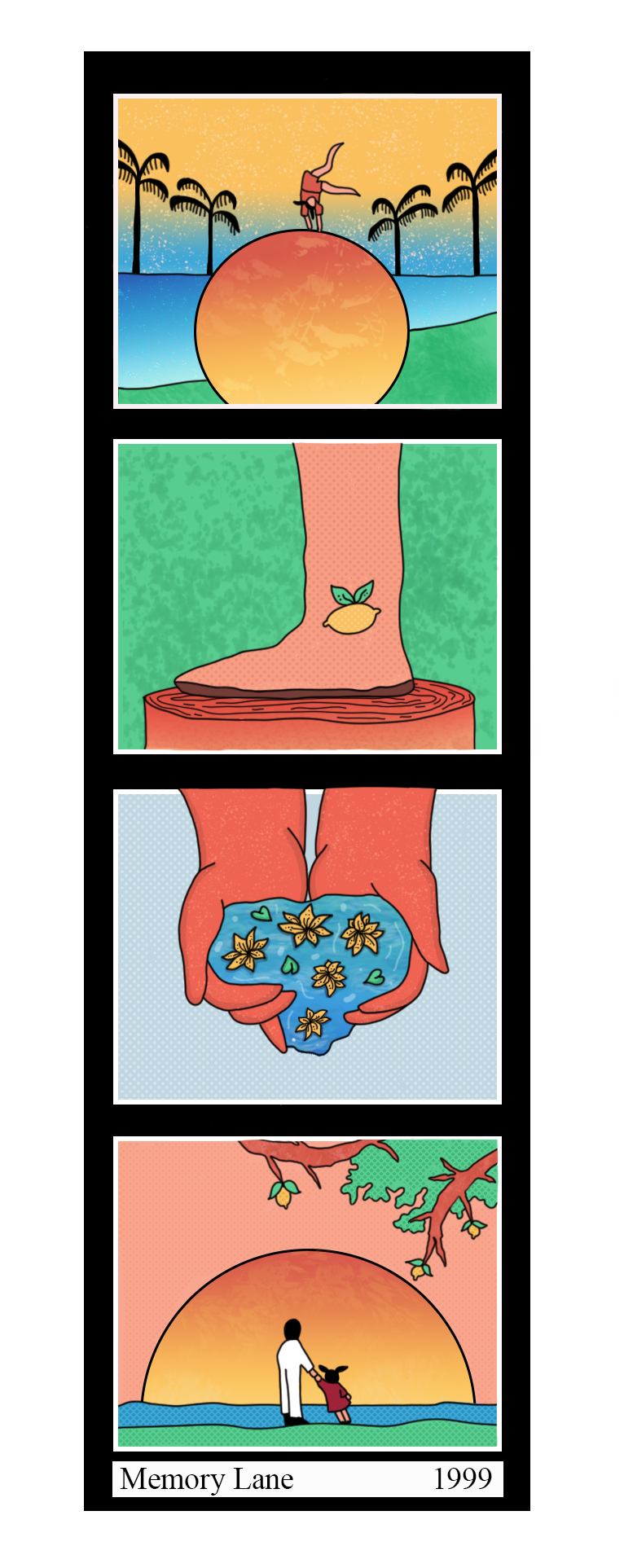
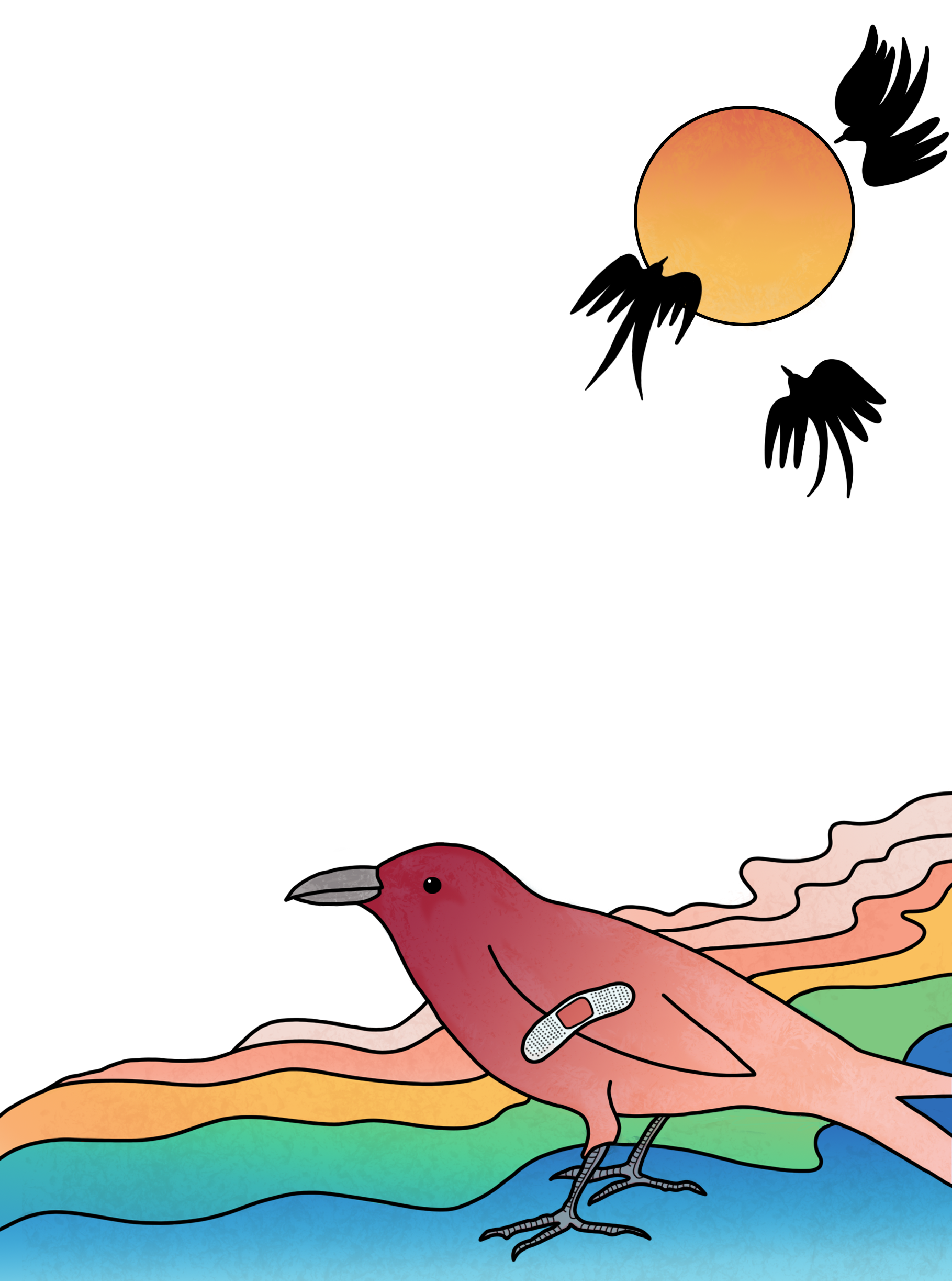
The exhibition is a personal portrayal of symbols and seasons of my life. Transitions of age and identities: from the wondering child to the contemplative adolescent, to exploring the self in partnership, to the humbling, anchoring friendships, and to the adoptive role of motherhood. The emotion of this lifelong journey is reflected through a dreamlike colour palette, intended to highlight a line from Rilke’s poetry: “Let everything happen to you: beauty and terror. Just keep going. No feeling is final. And remember, loneliness is still time spent with the world.” Elements of nature are pertinent in their metaphor generosity: The Tree of Life is a symbol of resilience in my homeland Bahrain; the blue birds embody the essence of finding freedom from the inner and exterior cages; the poppy flowers refer to re-birth (sleep, peace, and death); and finally, the sun as the guiding light that always carries me out of the dark night.
A link to the virtual exhibition and the catalogue can be found here:
-
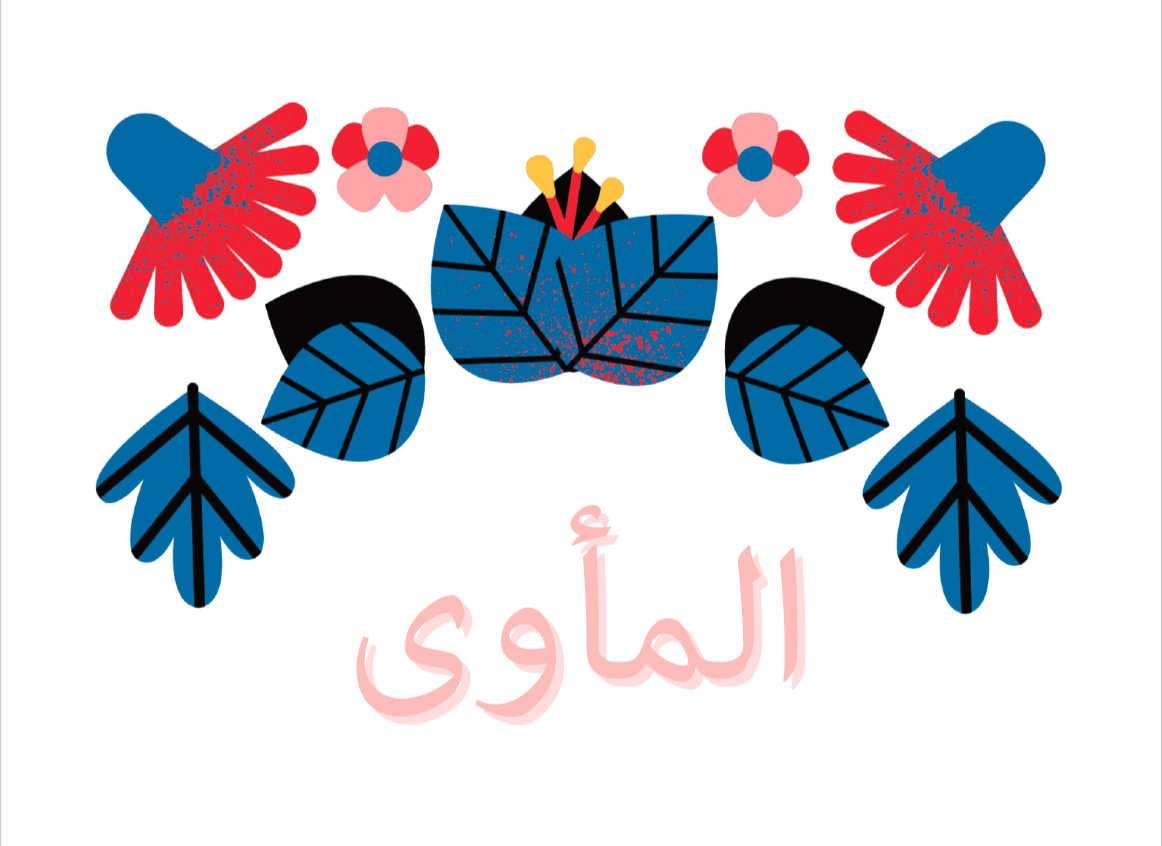
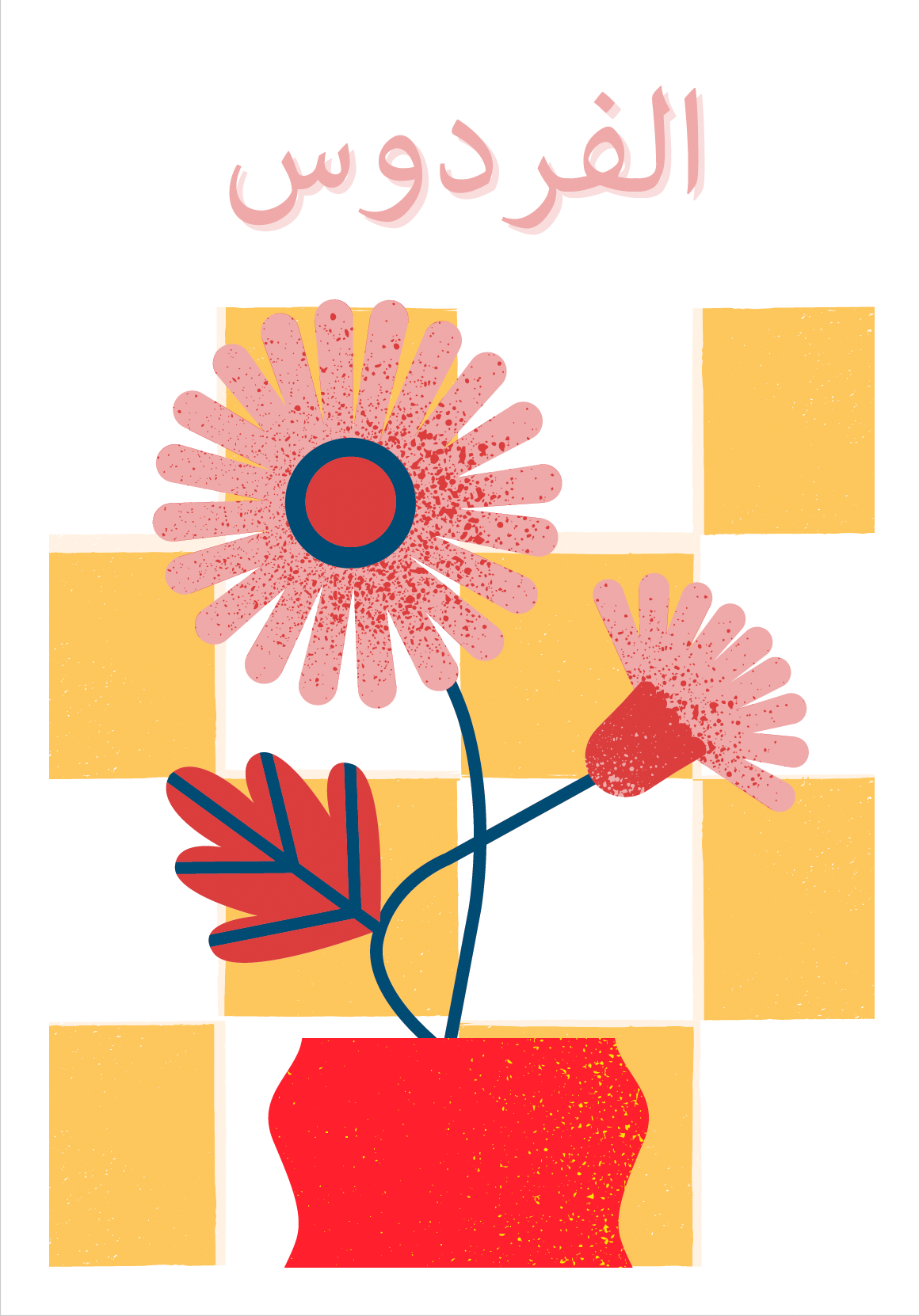
Letters to a Young Shaman is a lyrical, illustrated epistolary work exploring devotion, embodiment, love, exile, and spiritual becoming. Structured as a series of intimate letters addressed to a beloved figure, the project moves through the symbolic architecture of the Seven Skies—a concept shared across multiple spiritual traditions, including Islamic cosmology—each sky representing a distinct inner landscape of the human experience.
Blending poetry, prose, and visual art, the work meditates on what it means to live as a vessel body: to carry grief and wonder, rupture and repair, longing and homecoming. Each section is named after one of the Seven Heavens—Jannat al-‘Adn, al-Firdaws, an-Na‘īm, al-Ma’wā, Dār al-Khuld, Dār al-Maqām, and Dār al-Salām—and unfolds as both a spiritual inquiry and a love letter to becoming human.
Written in a voice that is tender, searching, and reverent, Letters to a Young Shaman asks enduring questions:
What does it mean to embody what is holy?
Where do we find refuge when certainty dissolves?
How do we learn to love ourselves, our bodies, and one another without condition?
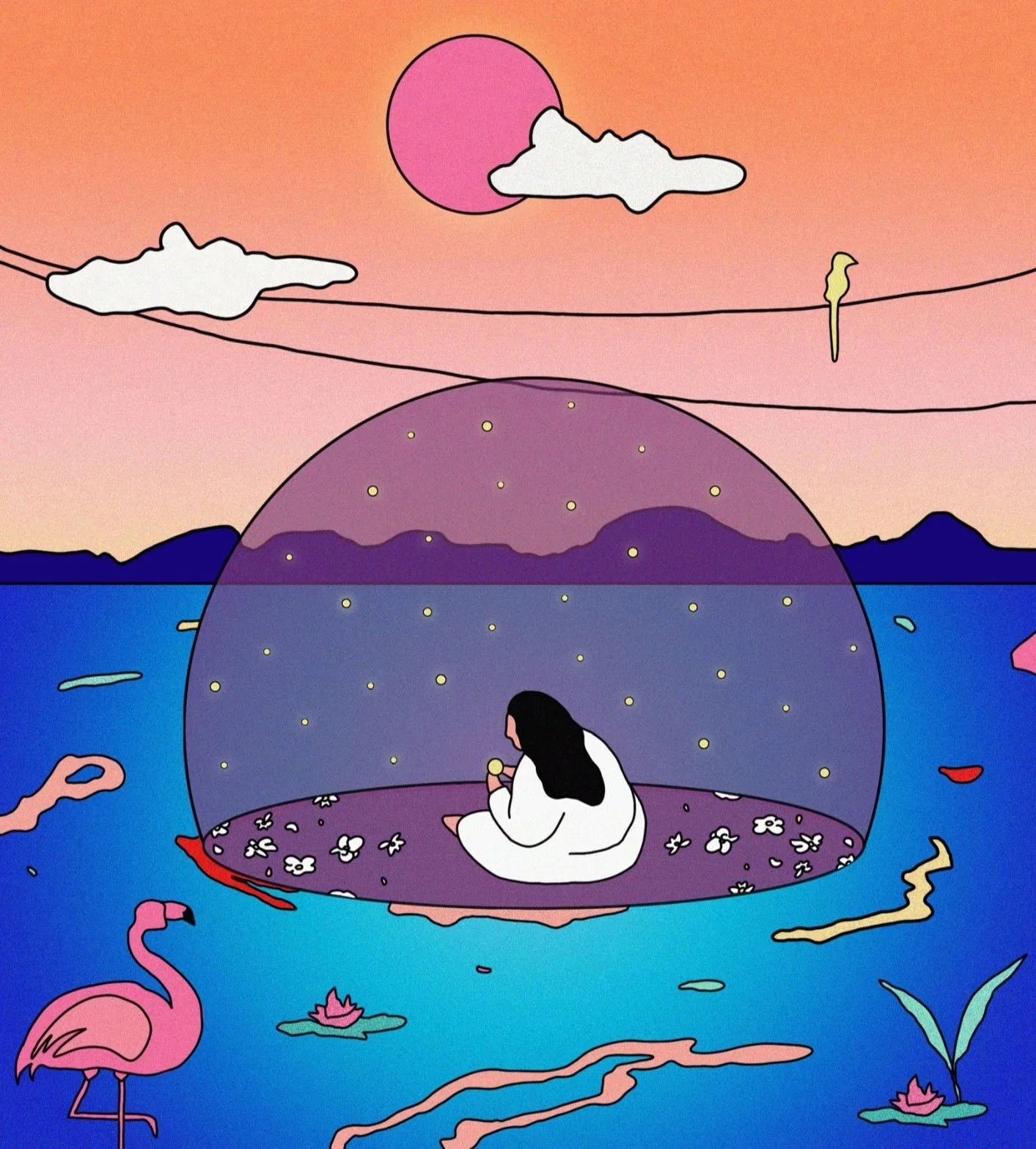
The accompanying illustrations function not as decoration, but as devotional objects—visual prayers that echo themes of growth, shelter, legacy, and peace. Together, text and image invite the reader into a slow, contemplative experience that honours mystery over resolution.
At its core, this project is an offering: a meditation on love as practice, on home as something we carry, and on the courage it takes to remain open in a world that wounds. It is written for those who tend inner fires quietly—for seekers, artists, mystics, and anyone learning how to return to themselves with gentleness.
A PDF can be sent if requested.
-
Illustration Pamphlet
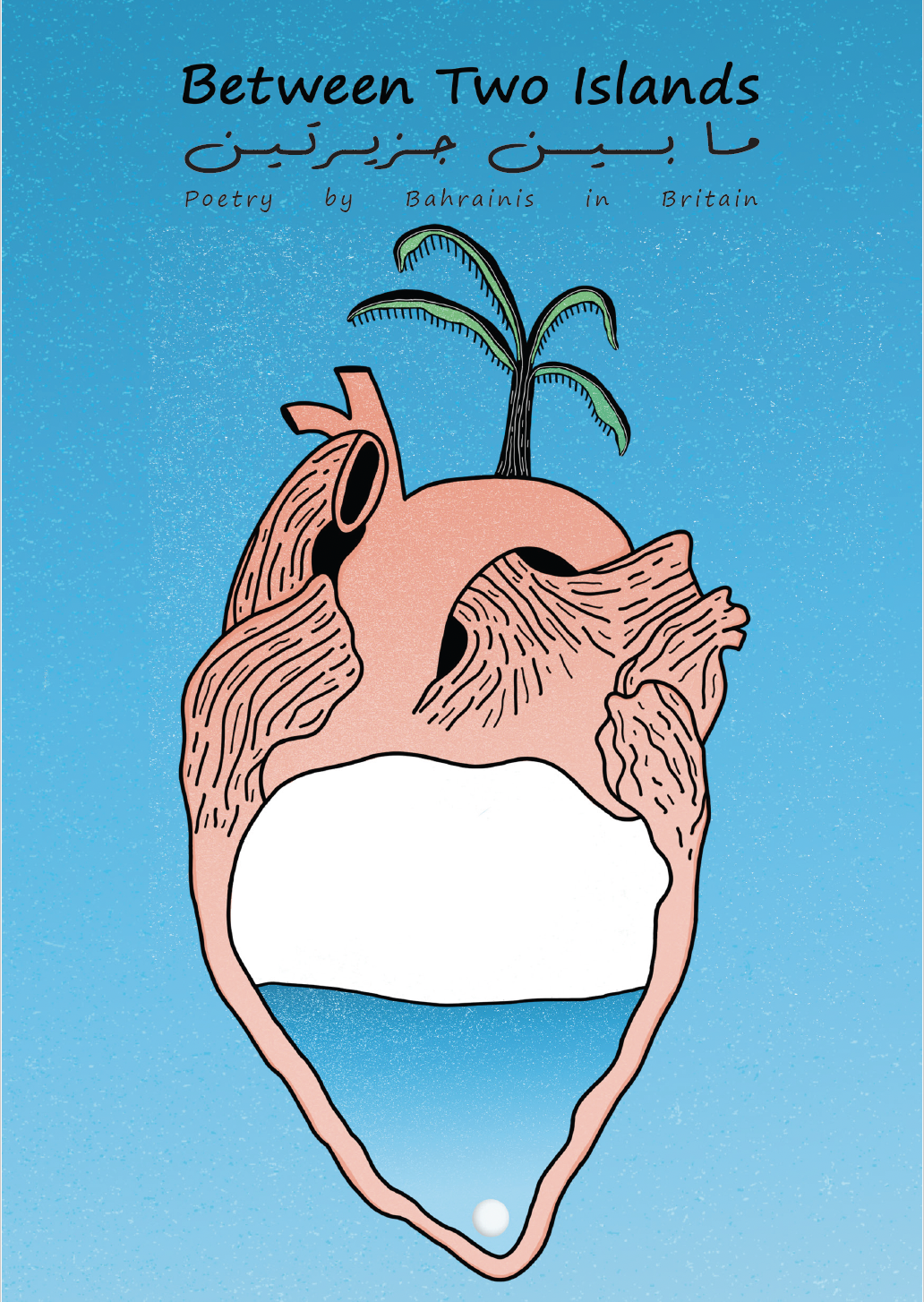
Between Two Islands is a multilingual poetry anthology showcasing the works of a marginalised Arab community in the UK: the Baharna.
Thirteen poets writing in English and Arabic explored themes of diaspora, duality, resistance and yearning. The English and Arabic poems communicate with each other and are accompanied by my illustrations. It is the first anthology of its kind for the community, which was published and supported by the Arts Council England, Liverpool Arab Arts Festival and Young Identity.
As part of the 2 months poetry and writing programme, I journeyed with the group through themes of “Heritage and Inheritance”; “Love and Conflict”; “Am I British?”; “What Remains?” and finally “Future”.
Inspired by their stories, I produced a series of 7 illustrations for the anthology, as well as a cover for the soundscape, titled “The Future”.
During the workshops, we explored the politicised Baharna identity, regardless of anyone’s political affiliation to the cause. A care package was sent with Arabic coffee and a traditional, hand-crafted container made from palm tree fibres (a guffa).
Pickingg up the guffa, and whilst singing Bahrani folk songs in their native dialect, the participants answered the following prompts:
What would your parents have kept in this container?
What will they store in it?
What do they imagine their descendants will store in it?
In doing so, we entered dialogues with past and future generation. The sea featured strongly in the anthology as part of our shared imagination: it is both inviting and an ambiguous danger. In the poetic theory text What the Date Palm Said to the Sea (1994), Dr Alawi Al-Hashimi writes: “If the date palm, for Bahrani people, is the real mother without whom they cannot live, then the sea is rightfully their father, giver of sustenance and life, though the sea is also a cruel and grim father.” The soundscape was presented at the Liverpool Arab Arts Festival as a bilingual digital audio experience exploring a seascape of a future Bahrain.
You can listen to the soundscape here:
https://www.arabartsfestival.com/events/the-future-a-between-two-islands-soundscape/
The guiding theme of the illustrations was based on the idea of fragmentation, weaving together elements of the sea as a representation of the deeply nostalgic vision of the Bahraini diaspora, where the pearl becomes a symbol of unification and peace. Dating back to the ancient civilisation of Dilmun, it was said that the Flower of Eternity (the Pearl) is found in the depth of Bahrain's seas. Through my art, I tapped into the imagined memory of forgotten ancestry—the line of those who left, for their safety and family, and how they must find ways to carry with them the eternal Flower of their legacy.
You can download a free digital copy here:
-
Illustration
This project is an illustrated meditation on culture as resistance—on the quiet, defiant ways art endures in the face of violence and erasure.
Set against the backdrop of the war in Ukraine, the scene unfolds like a stage revealed. Heavy curtains part at the top of the image, framing the devastation below and transforming the landscape into a theatre of witness. Burning buildings, scattered rubble, and a darkened sky situate the viewer inside a moment of collective rupture, where ordinary life has been violently interrupted.
At the centre of the composition, a lone pianist plays in the open air, performing not for spectacle, but for survival. The act of music here becomes a form of protest: a refusal to let destruction silence memory, beauty, or meaning. The small audience—two figures holding yellow flowers—echoes the persistence of hope, intimacy, and shared humanity, even when everything else has been stripped away.
On the left, a mural reinterprets Flowers for Peace by the Ukrainian folk artist Maria Prymachenko, whose work has come to symbolise cultural identity and resilience in times of war. Its presence asserts continuity: art speaking to art across generations, insisting that culture cannot be bombed out of existence.
Together, these elements form a visual statement about resistance that is not loud, but enduring. This illustration honours artists, musicians, and cultural workers who continue to create amid catastrophe—reminding us that even in ruins, there are still songs being played, stories being carried, and flowers being held out toward peace.
One-off designs are also included in the Gallery. They were created per request by a client